|
There was nothing out of the ordinary about a birth that took place on this day (17th May) 1935. The mother and father were living with her parents (not uncommon at the time), and so cramped were conditions that the birth took place at a neighbour’s house. The child was born at Brick House in Joyford on the edge of Berry Hill in the Forest of Dean. There was little that was remarkable either about the child as he grew up, playing in the woods, watching his grandfather in the village silver band and his mum and dad regularly doing a musical ‘turn’ at the local club. But he did well at school, and academic success for this son of a Forest coal miner would lead to a world of possibilities. After National Service he was off to New College Oxford where he plunged wholeheartedly into student life – taking part in drama productions and becoming editor of the prestigious student newspaper The Isis. The old pre-War class barriers were beginning to breakdown, and more opportunities were opening up. So, what would this young man do with his ‘shiny new degree’? We remember Dennis Potter today for his remarkable career in television, and perhaps here in the Forest of Dean most of all for his dramas Pennies from Heaven (1978), The Singing Detective (1986), and Cold Lazarus (1996) all featuring locally shot scenes (as well as local extras). There was the earlier – and for some, controversial – Wednesday Play A Beast with Two Backs (1968) much of which was also shot on location in the Forest. Television was Potter’s true passion and he had a huge impact on the development of television drama in particular. But his talents and interests were by no means limited to that one medium. He was a prolific journalist too (see The Art of Invective: selected non-fiction 1953-94, published in 2015), screenwriter for cinema, playwright for the stage, producer and director, cultural commentator, and even at one point stood for Parliament. And of particular interest for us at Reading the Forest, he was an author too. He wrote his first book, The Glittering Coffin (1960), whilst still at university. It was a ‘state of the nation’ work commenting on the society and politics of the time. It was highly personal in places with Potter writing in some detail (though briefly) about the Forest of Dean by way of example. At one point he admits, ‘I cannot hope to convey all that has happened in this district, but intend to produce a detailed study of the breakdown of a distinct regional identity at some future date’ (p44). In 1962 his second book, The Changing Forest was published, and in some ways, it was indeed simply an expansion of those few paragraphs he’d written about the Forest in A Glittering Coffin. It was also though a more crafted and controlled expansion of the themes he’d touched on his BBC television documentary Between Two Rivers (1960). His first major piece of television work (he’d already appeared briefly in the documentary Does Class Matter whilst still a student and had worked on Panorama as a BBC trainee) that he wrote and presented, had upset many people in the Forest (though not all) who saw it. The opening half in particular saw Potter appearing to criticise his family and friends in the Forest, before later in the programme admitting he’d now changed his thinking and could now see the vitality and value of the Forest’s community and culture. In his book, The Changing Forest, Potter had the space, and the control over content, to express some of the detail and nuance that he wasn’t able to in the television format of Between Two Rivers. In the book (that shares a great deal with the programme) he spends more time with people and explores themes at greater length and in more detail. Potter as author is able to order and shape both evidence and argument in a way that he simply couldn’t in the television documentary. Potter’s developing skills as a journalist are clearly evident in The Changing Forest, but his authorship, just as in his work for television, would soon turn towards fiction-writing – art the better form, he realised, for telling truth. In all Potter would write four novels, and like his television dramas, they are often complex and challenging. As a young man he’d begun working on a novel, The Country Boy, though he never finished it. The various manuscripts of it are today housed in the Potter Archive at the Dean Heritage Centre (available to view on request). A few lines stand out as particularly poignant to those of us who know the Forest of Dean well. The young protagonist, David, is moved away from the Forest of Dean and is at a city-centre school in Fulham (just as Potter had). The other children refer to him as ‘the country boy’ because of his speech, but he finds it: ‘impossible to explain, he came from a hilly, green and lovely certainly, yet coalmining part of England, on the border of Wales. The Forest, the land on its own. Not just “the country”’ (for further details and analysis of this work see Carpenter, 1998, p86-88). There are other scenes in the unfinished story that reappear nearly thirty years later in The Singing Detective, just as in a similar fashion the novels that he did complete and publish would inspire - or be inspired by - some of his other television work. Potter’s first published novel was Hide and Seek (1973). Arguably a masterpiece of post-modern literature, the book plays to great effect with the novel form and the whole concept of the omnipotent author. Reading this challenging and exciting work it becomes clear that several of its ideas also made their way into The Singing Detective and later Karaoke (1996). The blurring of boundaries between author, protagonist and text are particularly striking, as is one scene in particular featuring a psychiatric consultation, all of which reappear in the television drama. Like much of Potter’s television work, the novel features seemingly biographical elements. It’s protagonist, Daniel Field, like Potter, went to Oxford and he grew up in the Forest of Dean; the narrator in the book suffers from the same devastating skin disease as Potter; and Potter is known to at one point have had an appointment with a London psychiatrist. But as Potter would often explain, a writer’s experiences are merely the raw material he draws on and reshapes rather than a literal retelling of biographical incidents. But, as his biographer Humphrey Carpenter wrote, Potter’s message in this complex and tricky novel seems to be aimed at any future biographers, ‘I have been playing hide-and-seek with you. You think you are writing my life, but I am leaning over your shoulder, writing it for you. You, even you, are a character in my story. I can manipulate you too’ (Dennis Potter: The Authorized Biography, 1998, p291). Potter's next novel, Pennies from Heaven (1981), was a far more straightforward work. After his 1978 BBC television serial, memorably featuring actors ‘lip synching’ to popular songs of the 1920s and 30s, and scenes filmed in the Forest of Dean, Potter had adapted the script into an MGM film released in 1981. Around the same time, he turned the now USA-located narrative into a novel, the main challenge being that of conveying the same ideas without the musical elements of the film and television versions. Ticket to Ride (1986) saw a return by Potter to previous form regarding his novel writing. Much like Hide and Seek, this novel was again dealing with themes of male sexual desire, breakdown, and the seemingly fractured self. The book opens as the protagonist suffers amnesia on a train as it arrives at Paddington Station, a moment of catastrophe that triggers a seeming division of John Buck, and the introduction of his internal ‘secret friend’. Potter is said to have written it in a burst of creative energy over 60 days, whilst also working on drafts of The Singing Detective screenplay (Carpenter, p446). The book was well received by the (literary) critics and was even considered as an entry for the Booker Prize (John Cook, Dennis Potter: A Life on Screen, 1995, p208). Again, there were elements in this novel that relate to some of his previous television plays. He went on to adapt it for the screen becoming the film Secret Friends (1991) starring Alan Bates and Gina Bellman, a film Potter himself directed. He would go on to adapt his next novel Blackeyes (1987) also for the screen, this time as a four-part television drama of the same name broadcast on BBC2 in 1989. The TV adaptation starred Gina Bellman as a model and niece of an ageing writer (who in the television version also narrates her story). Potter dedicated the book to his daughters (Sarah and Jane, in their twenties at the time), and in it he addresses how advertising - and culture more widely – commodifies and objectifies women’s bodies. He later explained how this was by-extension a comment on culture and society in general. What was perhaps safer territory to explore within a novel made for a far more problematic and controversial television outing, inducing criticism for what many saw as the drama's own objectification of women. In the novel Potter again addresses the issue of ‘authorship’ through both the character of her uncle, himself a writer who seeks to exploit his niece’s experiences in his own work, and the ‘author’ of the novel we are reading, himself another character, ‘Jeff’, in the book (Cook, p261). Potter saw television as a means of communication that cut through the old class barriers that divided the audience of ‘high art’ (high-brow literature, fine art, opera etc.) from that of the ‘popular’ (pop music, variety entertainment, etc.). Television offered the opportunity to speak to all parts of society at the same time and Potter seized it. His feelings towards the novel as a form were more ambivalent. On the one had he felt that writing a novel gave him ‘a certain freedom and relief’ from the demands of writing for the screen, whilst at the same time he believed that the novel as a contemporary form of writing ‘is almost dead’ (Potter On Potter, 1994, p127). If the only work Dennis Potter had ever produced were his four novels he would surely demand our attention, and in the Forest of Dean some pride in his achievements. The fact that they represent the merest tiny fraction of his creative output is instead remarkable (see W. Stephen Gilbert's Fight & Kick & Bite: The Life and Work of Dennis Potter, 1995 for an excellent list of all of Potter's work). Yes, Potter will rightly be remembered and celebrated for his contribution to television. In the Forest of Dean in particular he will be remembered for the plays that saw the exciting world of television production set up shop (temporarily at least) in the neighbourhood. Of his books, if at all, it is his record and analysis of the area in the 1960s, The Changing Forest that continues to resonate to this day. But, whether in the Forest of Dean or anywhere else in the world, despite Potter’s own thoughts on the novel, pick up one his books for a change, and marvel at the genius of this sorely missed fine mind and creative talent! Dr Jason Griffiths, co-director Reading the Forest, University of Gloucestershire
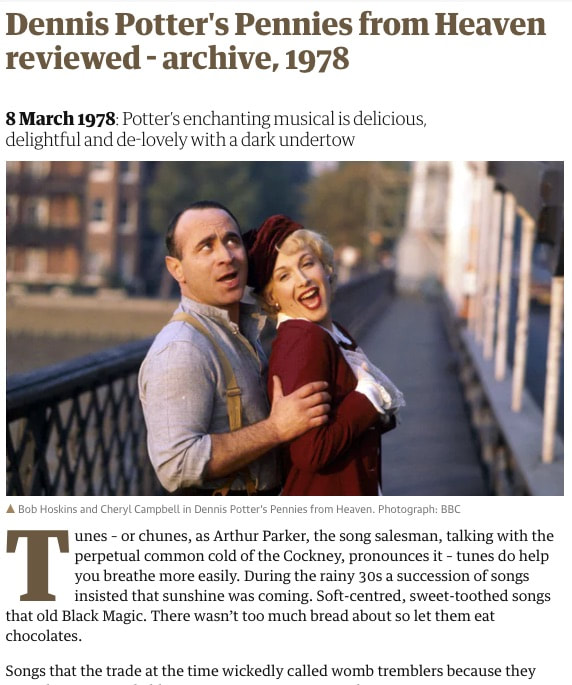
A new blue plaque has just been unveiled marking the childhood home of Dennis Potter in the Forest of Dean. It was a Friday, May 17th 1935, when Dennis Christopher George Potter was born in the small hamlet of Joyford, just stone's throw from the larger neighbouring village of Berry Hill itself a mile and half from the small market town of Coleford. Potter's family were living with his father Walt's parents, and it's on the outside of this house, today called Holmdale, that the plaque has been erected. So cramped was accommodation in 1935 Dennis' mother Margaret gave birth next door at Brick House. As the young Dennis grew up he played in the woods and fields near by; walked up the lane to Christchurch School; and attended the local chapel. Later he gained entry to Bell's Grammar School in Coleford. He would finish his schooling in London, before completing National Service, and then a degree at Oxford. He become a BBC trainee, journalist, stood for Parliament, and then...became one of the most influential television dramatists of his time, a producer, screenwriter, commentator. Throughout all of this time the Forest of Dean remained crucial to him both personally and creatively. He would return to it again and again in his work - in print and on TV. Despite the demands of work being centred on London he would return frequently to see his parents, family, friends, visit 'The Club'. In 1966 he returned with is wife and young family to live in the Forest, at Lydney, before finally settling in near by Ross-On-Wye where he would live for the rest of his life. Potter's relationship to the Forest - in the Forest of Dean - has perhaps too often been portrayed as 'problematic'. Certainly his unflinching honesty regarding both its problems and his sometimes complex feelings towards it did not endear him to everyone in the area. From his first appearance on television (as an Oxford Undergraduate) to his documentary Between Two Rivers (1960), and his dramas that featured the Forest, it could be guaranteed that a slew of letters would arrive at the local Forest of Dean newspapers, many criticising his work. But as many would be written in his defence and in praise of his latest television outing. In his early career he engaged with his local critics, often corresponding with the local paper in response to specific letters, often with some whit. The Forest of Dean remained an important part of Dennis Potter his whole life, and in recent years his importance to the Forest of Dean has begun to be properly, publicly, recognised. In 2004 there was a week-long festival in his honour; there have been other events; two fine public artworks have been created; and the Dennis Potter Archive & Exhibition has been established at The Dean Heritage Centre. and now, this Blue Plaque irrevocably marks, in perhaps the simplest yet most widely recognised and easily understood way, the link between the Forest and one of its finest ever creative minds. The plaque has been erected by the Foresters Forest Landscape Partnership, funded through the National Lottery Heritage Fund. Other Blue Plaques are to follow, as well as the project's own Green Plaques marking individuals who though of less national importance are of considerable local significance. It was often said that the attitude to Dennis Potter amongst the people of his native Forest of Dean was, at best, ambivalent. With the local festival celebrating his life and work in 2004, a series of subsequent exhibitions and screenings, and perhaps most significantly of all the archiving of his papers at the Dean Heritage Centre, that assertion has become increasingly difficult to support. And perhaps now it can finally be put to bed, with his depiction in a new piece of public art in his home-town of Coleford. A new mural by prolific local artist Tom Cousins shows Potter alongside two fellow Forest authors, the popular poet, performer and memoirist Joyce Latham, and first world war poet, solicitor to the poor and later BBC broadcaster F . W Harvey. The mural was inaugurated on Saturday (November 3rd) with a gathering at nearby Cafe 16 of friends, family and fans of the three late writers, as well as local dignitaries. The new artwork is part of the Reading the Forest project run by the University of Gloucestershire and funded through the Foresters' Forest HLF Landscape Partnership programme. Historian and Reading the Forest's co-director Dr Roger Deeks said, "This mural is all about inspiring the next generation of writers. If they see this mural depicting people who grew up near-by, and realise that they too could be successful writers, then that's job done!" The mural has generated a great deal of interest and, supported by an information campaign, is bringing new people to the work of all three writers. Co-chair of Reading the Forest, University of Gloucestershire's Jason Griffiths said, "It's been a joy of the past few years to discover the breadth and depth of the Forest's literary heritage. To a certain generation Dennis Potter is perhaps the most recognisable writer on our two murals, but he's just one of dozens of local writers that have been writing about and setting stories in the area for hundreds of years." The mural showing Potter is sister to the project's other local writers mural in near-by Cinderford representing writers from West Dean. The Cinderford mural shows Leonard Clark, Winifred Foley, and Harry Beddington. Walking in the Middle of the Road: Working-class homecoming in British TV Drama Birkbeck Cinema, 2nd November 2018: 18:00 – 21:00 If only the experience of Nigel Barton, over 50yrs ago, had nothing to say about the contemporary experience of students from a working-class background at university today, but sadly it seems it does. That's the premise of a screening of Potter's Wednesday Play Stand Up Nigel Barton (1965) being organised by Birkbeck, University of London at their Birkbeck Cinema. The television play - later adapted for the stage - is being show alongside Alan Plater's Land of Green Ginger (1973). Potter's play draws heavily on his own experience as a student from a working-class background at Oxford in the 1950's. Although not purely auto-biographical, scenes from Potter's appearance as a student in the television documentary Does Class Matter (1958) are reproduced shot-for-shot with the play's star Keith Baron in place of the young Dennis. As the billing for this latest screening puts it, it is perhaps as relevant now as it was then: "The idea of the 'flattened' culture is being exposed for the myth that it is, and the 'classless society' truly has never arrived." Fin our more about the screening, and book tickets, at the link here. One of Dennis Potter's unmade screenplays will make it to broadcast this Saturday 8th September (2018) - not on TV or cinema, but on Radio. As part of BBC Radio 4's strand Unmade Movies his screen adaptation of D M Thomas's The White Hotel will be heard as a radio drama, with Anne Marie Duff and Bill Patterson. It has been directed by Jon Amiel who directed Potter's brilliant The Singing Detective. Read more about this exciting story in The Gaurdian online... A sort of 'on this day in history' courtesy of The Guardian with this review of Pennies from Heaven (1978) by Nancy Banks-Smith, 8th March 1978. Hard to remember / imagine (depending on your age!) that Potter was, as Nancy points out, only 42 when this was produced. Groundbreaking television at the time, a prompt for wistful thoughts on Potter alive today - Netflix? Cross platform? Transmedia experience? Spotify playlister?
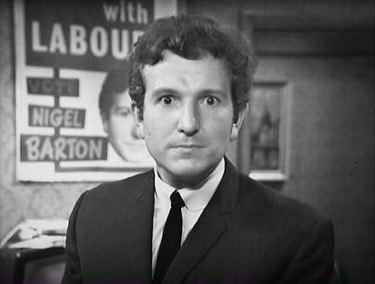
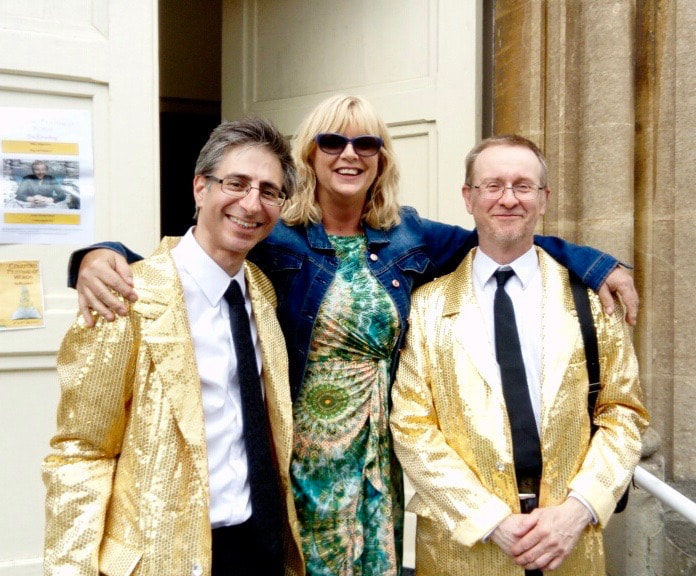
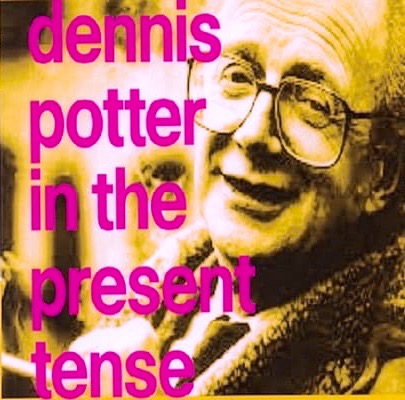
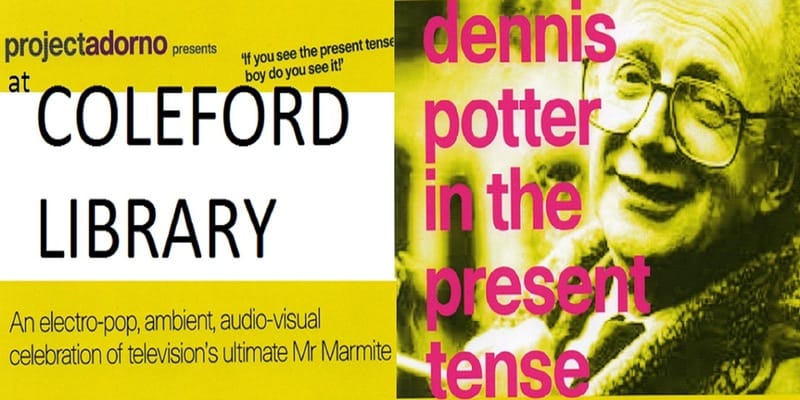
Christmas 1977 saw Dennis Potter once again return to the theme of The Forest of Dean in a special programme for BBC Radio 4. A Christmas Forest, was broadcast on Boxing Day, and was described in the Radio Times thus: Dennis Potter spent his childhood in the Forest of Dean, Gloucestershire. The sounds of childhood Christmas still ring in his ears, and the images remain as powerful as ever. BBC Radio 4 FM, 26th December 1977 14:15 The programme, produced with Brian Patten of BBC Bristol, included Berry Hill Band and the children of Berry Hill School. One of the readers was Potter's own son Robert. It seems that as ever Dennis was involved hands on in the making of the programme as evidenced by an intriguing recording held by the Dennis Potter Archive at the Dean Heritage Centre in Soudley, Forest of Dean. Potter's daughter, Jane, recalls how her father purchased a Grundig reel-to-reel tape recorder in 1965. Amongst the fascinating recordings of every day Potter family life, are the raw unedited recordings made in Berry Hill of the school children singing and the band playing/rehearsing for the Christmas radio programme. Whether these are copies of those made for the programme by the production team, or Potter's own recordings is unclear. This, and the other recordings in the collection offer an invaluable insight into the important role of family and community in Potter's life and work - and ever more so in all our minds at this time of year. A Christmas Forest was repeated the following year on 23rd December. The BBC are reporting that actor Keith Barron has passed away at the age of 83 after a short illness. Although known more recently for his role in the sit-com Duty Free, one of his early roles was as the eponymous 'Nigel Barton' in two of Potter's early plays for television. In Stand Up Nigel Barton (1965) he plays the young Oxford educated Nigel struggling to adjust to his new social standing. Coming from a mining community yet now moving amongst the elite he's now 'between two rivers' - no longer feeling he fits in either setting. In Potter's sequel play Vote, Vote, Vote for Nigel Barton (1965) he stands for election. Much of the two plays see Barron acting out scenes remarkably close to those of Potter's own life. Barron also playied the young Nigel in flashback - adults playing children, a technique that resurfaced to great effect many years later in Blue Remembered Hills (1979). After the show - Praveen and Russel with Dennis's daughter Jane How to capture the essence of writer, his biography, work, influences, impact? And when it’s a writer such as Dennis Potter – dramatist, journalist, novelist, commentator. There’s realism, naturalism of course – tell the story, facts, dates, works. But that wouldn’t do for a writer who famously felt that drama was the better form for telling ‘truth’ – and at that, drama that further played with ideas of inside and outside the head, the past and present, and multiple layers of ‘reality’ intersecting and interplaying. ‘No biography’ gasps Daniel in his last breath, a request ignored by those who reanimate his head for the purposes of entertainment (in DP's Cold Lazarus). So, what a relief – what a thrill – to finally get to see Project Adorno’s Dennis Potter in the Present Tense. Developed and written after extensive research, interviews with scholars, enthusiasts, and members of his family, it’s incredibly well-informed. It is though a million miles from any dusty academic study or realist biography. With songs, audio clips and striking – often abstract - visuals the show (for that’s the only way to describe it) was an entertaining, amusing, thought provoking and touching, tour de force. As Potter fans, the (sadly too small) audience at this performance at Coleford’s Festival of Words, were appreciative of the insights the pair had clearly got from their visits to the Forest of Dean, and studying Dennis Potter's work. There were references to his upbringing in the Forest, but also fabulous songs and clips relating to Al Bowly, Hammersmith Bridge, razoxane, and Blackeyes - and much more. A feast for the brain, eyes, ears and soul, if you ever get the opportunity to see this short but wonderfully formed show – grab it! |
Archives
August 2025
Categories |